




It is that time of the year again. Many of the global watch and jewellery brands, authorised dealers, collectors, journalists, bloggers and influencers, and other key stakeholders – all of whom comprise the global luxury watch and jewellery community – will come together at Geneva, Switzerland during 27 March to 2 April to take part in Watches & Wonders 2023. One can only predict what the various brands will launch. Each with it’s own priorities- their launches could include anything from time-only pieces, mid-level complications, jewellery pieces, grand complications, and even new horological innovations. Often, their launches also include new variations of models already in their catalogue, such as new case metals, different colour dials, bejewelled watches, to name a few. The anticipation and suspense of what will be unveiled is exciting to say the least. Such is the global nature of the watch collecting world, that collectors – based in New York, Dubai, New Delhi, or Sydney – are going to be glued to their screens in anticipation. In spite of the excitement and buzz Watches & Wonders creates each year, I would like to highlight three timeless horological designs which have been in their respective brands’ catalogues for years and have stood the test of time. After all, this moment offers time to reflect not only on what is new, but also on what is enduring.
Cartier Santos
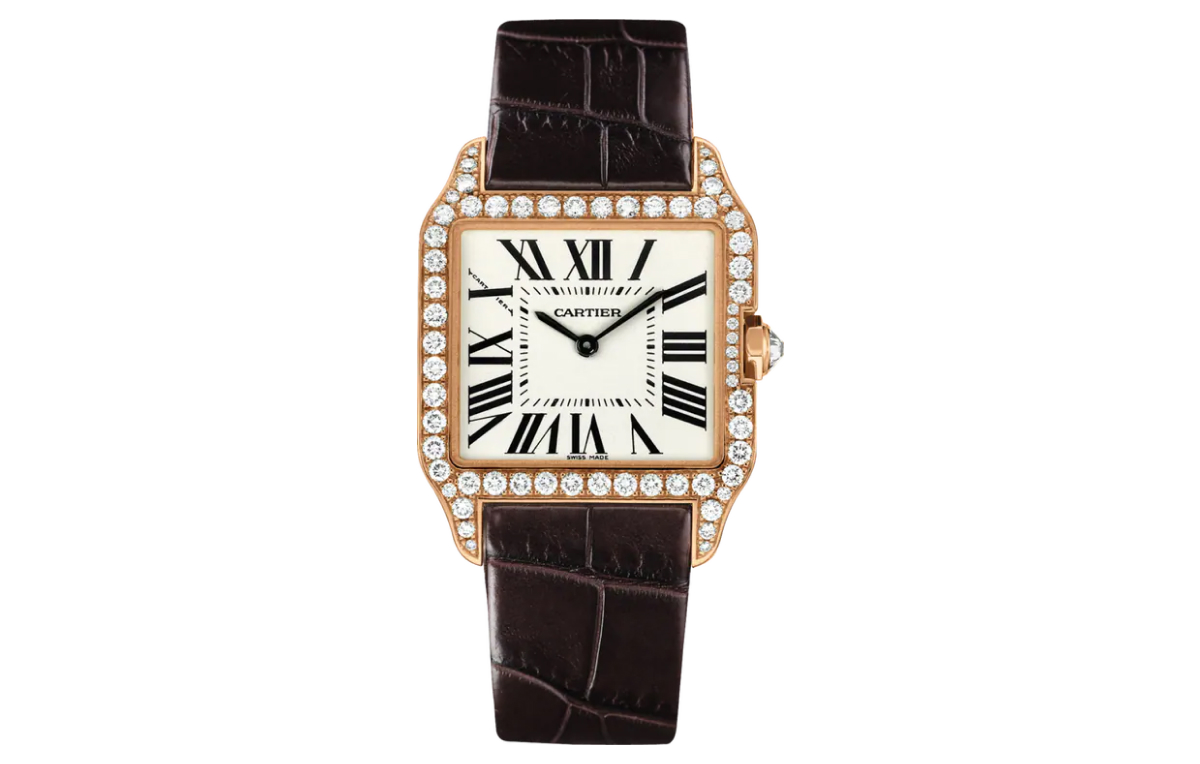
“The Santos watch was conceived by Louis Cartier in 1904 to help aviators tell time mid-flight. Since then, this pioneering wristwatch has become an icon, defined by its geometric dial, harmoniously curved horns, and signature exposed screws.”
The Cartier Santos can trace its roots back the early 1900s. The Santos collection of today takes the spirit of Louis Cartier’s creation of the past and blends it into a modern and contemporary wristwatch collection. The current Santos collection has about sixty models, for both men and women with options to suit individual needs and budgets. The range includes time-only watches (both with and without date), chronograph, open-worked, and diamond pieces. Some models have an interchangeable strap mechanism, allowing the wearer to switch between bracelet and strap. The entire range, depending on the individual model, is powered by a quartz, automatic, as well as hand-wound movements.
Whether one chooses a stainless-steel model, two-tone model, gold model, or a bejewelled model, each manifests the unmistakable Santos design. Often, rectangular watches are typically not as sought after as round wristwatches. The Santos proves an exception to this rule. It is one of the greatest designs in horology and one of the most recognizable. It is timeless. It is as relevant and fresh today, and will remain so in the distant future, as it was 119 years ago when it was first introduced.
Jaeger LeCoultre Reverso
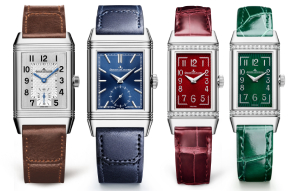
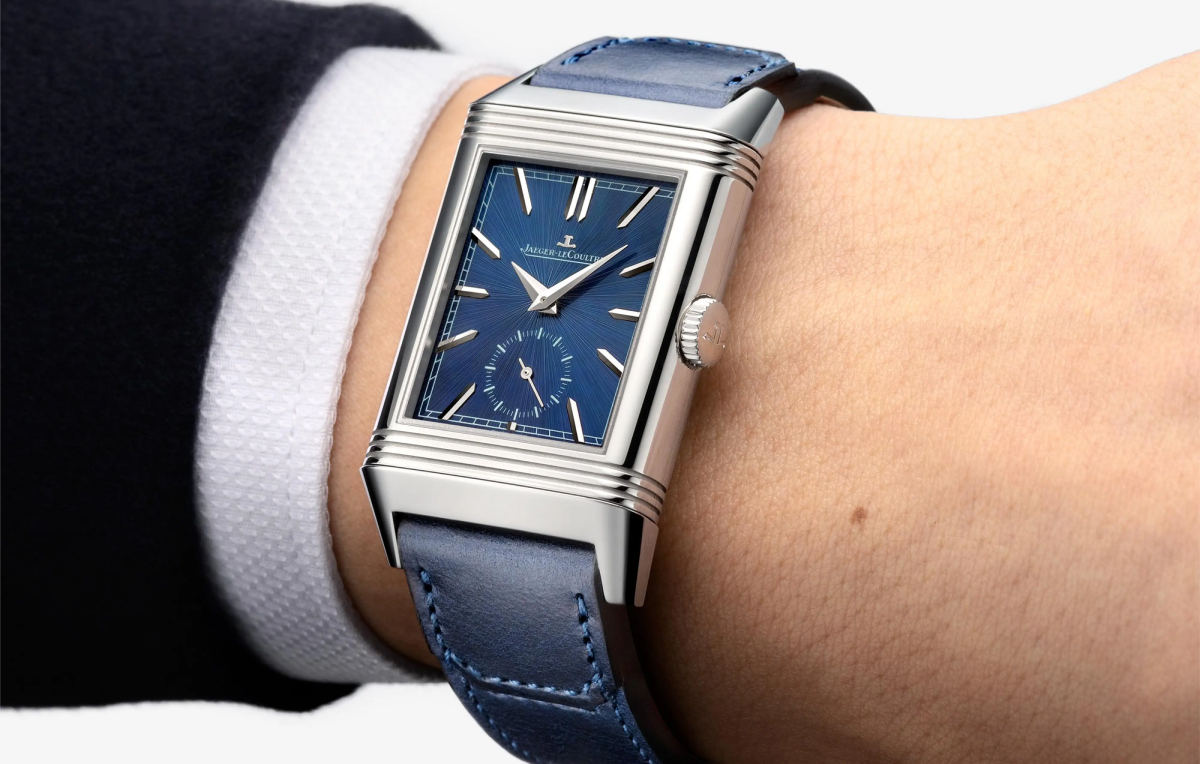
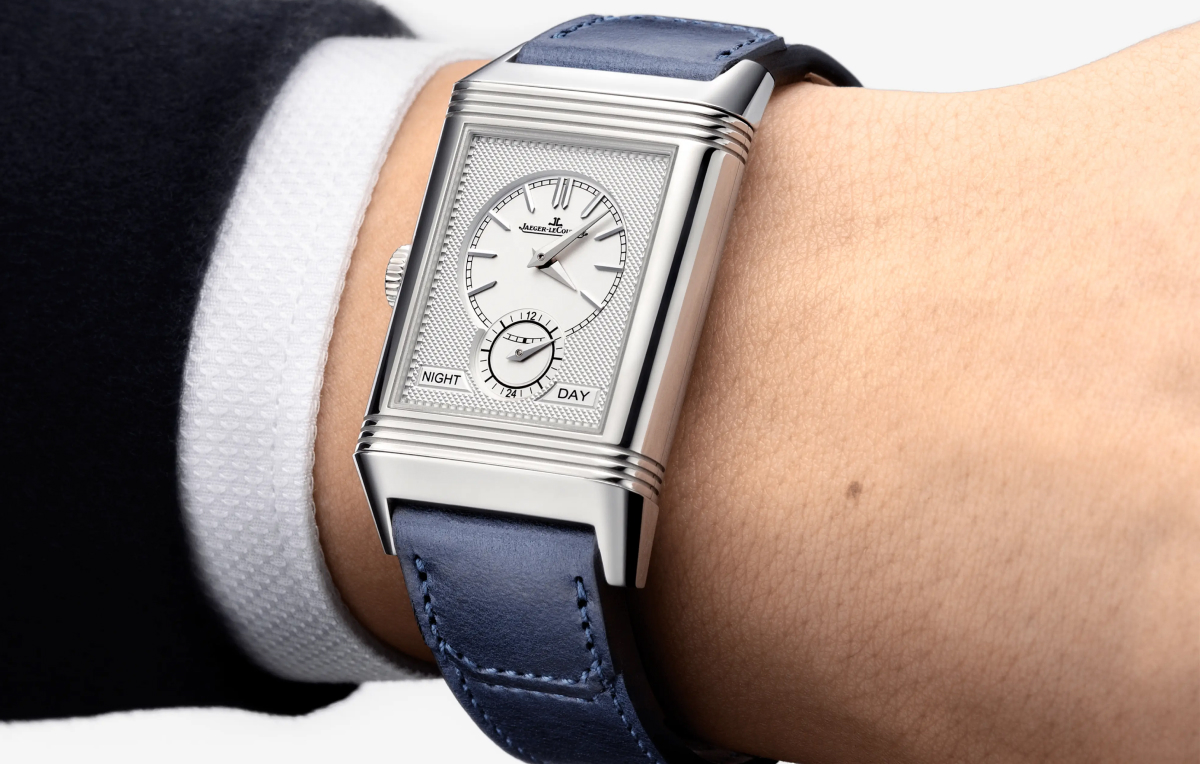
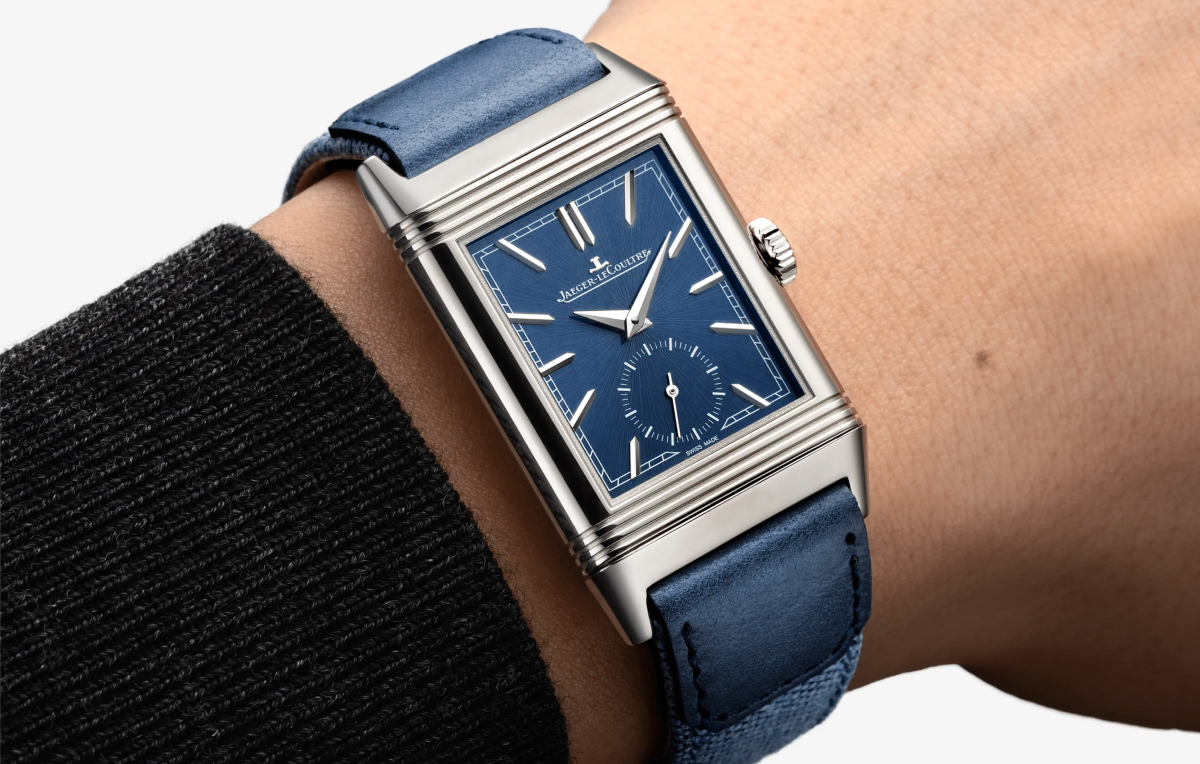
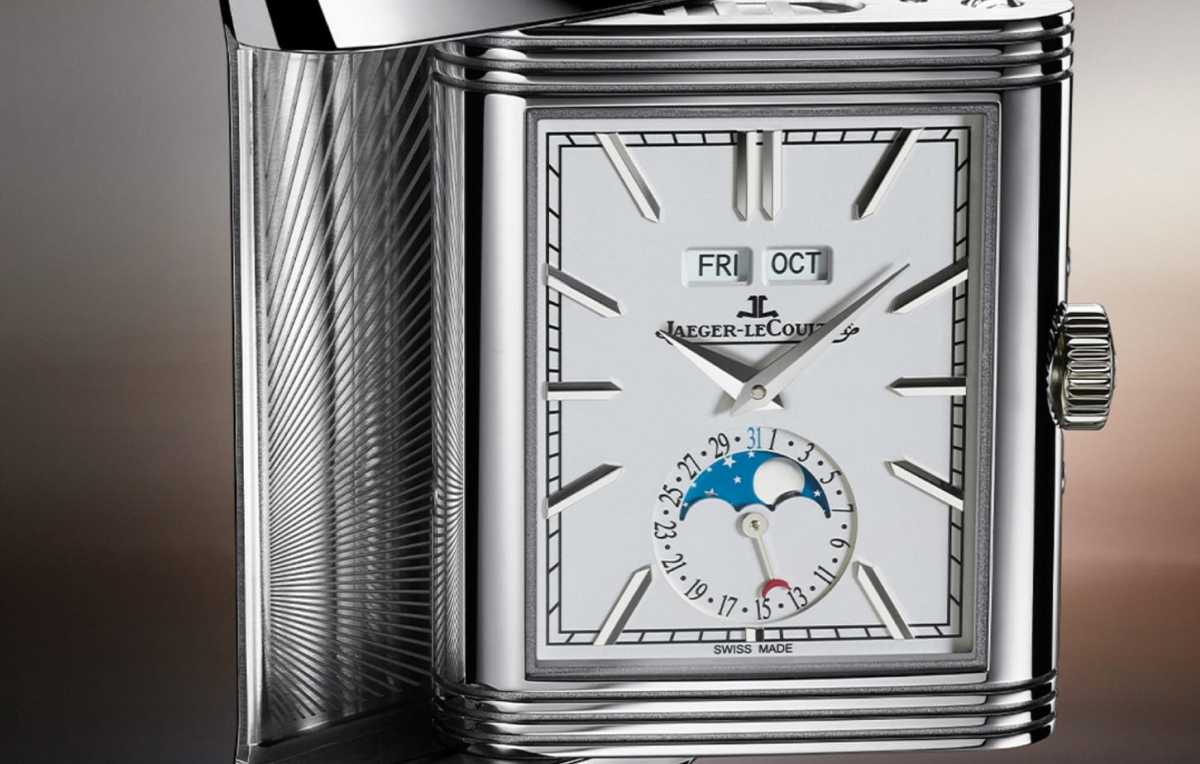
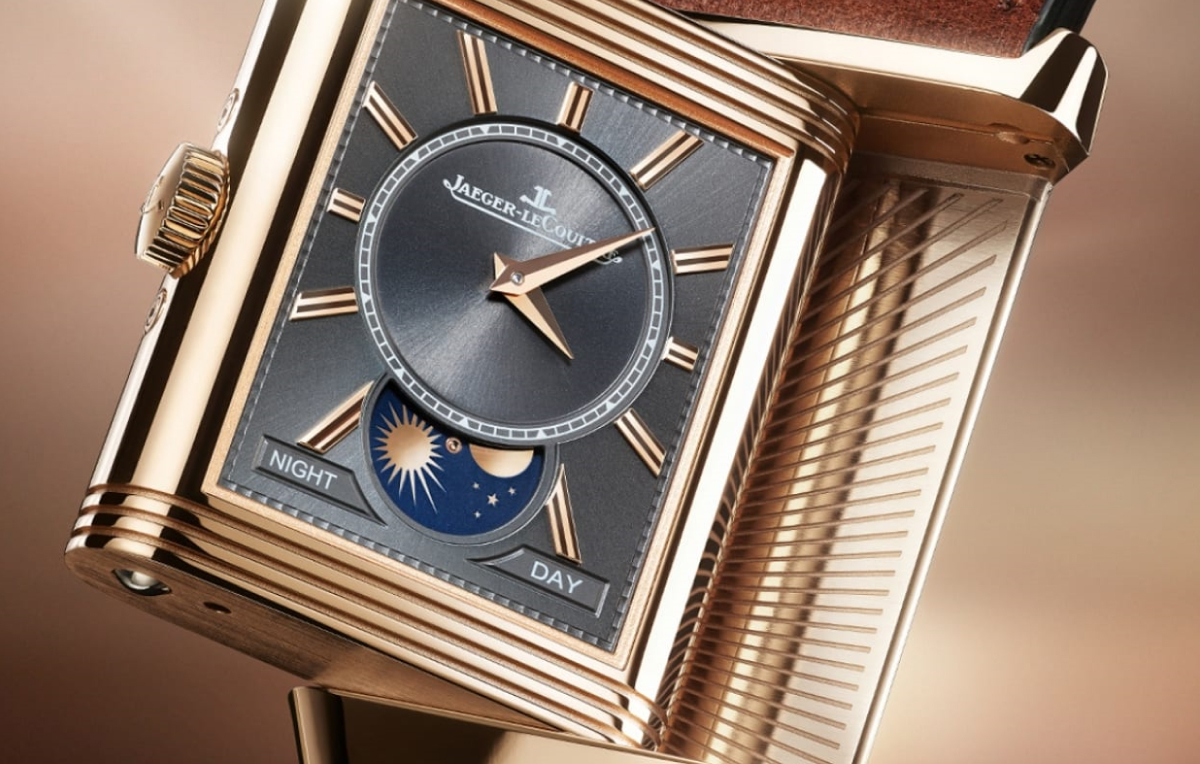
The Jaeger LeCoultre (JLC) Reverso has its roots in game of Polo during the times of Colonial India. Legend has it that Cesar De Tray – a Swiss businessman – while on a trip to India in 1930, was requested by a British Army Officer at a Polo Match to create a watch that would withstand the physical demands of Polo. Mr. Tray shared the idea with his friends at the brand -then known as LeCoultre- and the rest, as they say, is history. In 1931, the Reverso was launched. A rectangular watch with a patented reversible case so that the dial side could be turned over to protect it from physical harm while playing Polo. What began as a robust watch for a physical sport, is today a horological icon. The current Reverso collection includes about forty models, for all genders, and something to suit individual needs and budgets. The range includes time-only watches, with complications, and several bejewelled pieces. Models displaying time only on one side are known as “Monoface,” leaving the ‘blank’ side open to personal engraving and miniature art creations. Mens’ models which show time on both sides are known as “Duoface,” and Ladies’ models showing the same are known as “Duetto”. The entire range is powered by a combination of JLC’s impressive in-house quartz, hand-wound and automatic movements.
The very nature of the Reverso allows it to be a superb platform for different aesthetics, complications, precious stones, miniature artwork, and grand complications. JLC has used the Reverso to showcase ultra-grand complications, including the first ever three sided grand-complication – the Reverso Grand Complication a Triptyque of 2006. With nineteen complications, it is one of the most complicated wristwatches of all time. And more recently the impressive open-worked Reverso Tribute Minute Repeater of 2021. Whether one chooses a simple stainless-steel Reverso Monoface or a precious metal Reverso Duoface or Duetto, one can be assured that they are wearing horological greatness on their wrist. The Reverso is one of the greatest horological designs of all time. As timeless today as it was in 1931, and as it will be another 92 years later and beyond.
Patek Philippe Golden Ellipse
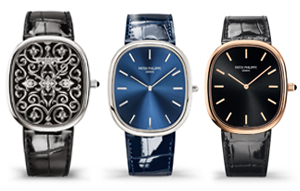
“…its design was inspired by the principle of the ‘golden section’ discovered by the ancient Greek mathematicians. This “divine” proportion, expressed as a ratio of 1 / 1.6181, forms the basis of some of history’s greatest works of art and architecture.”
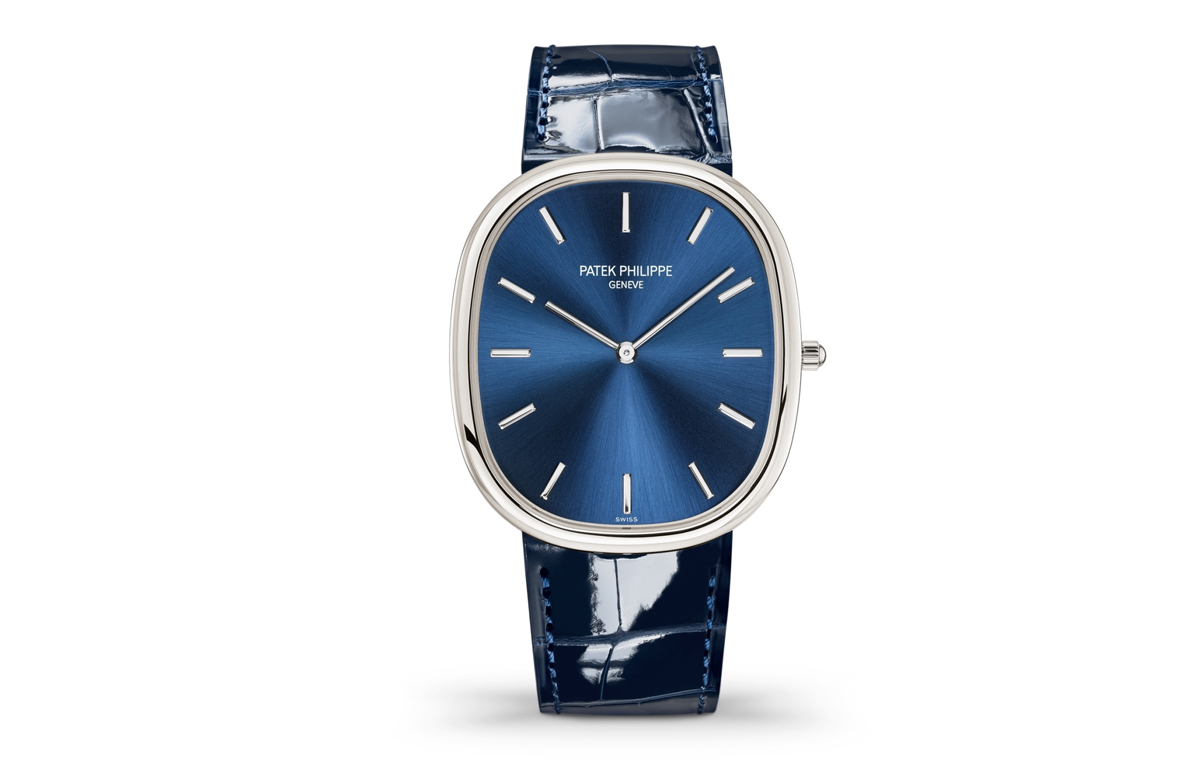
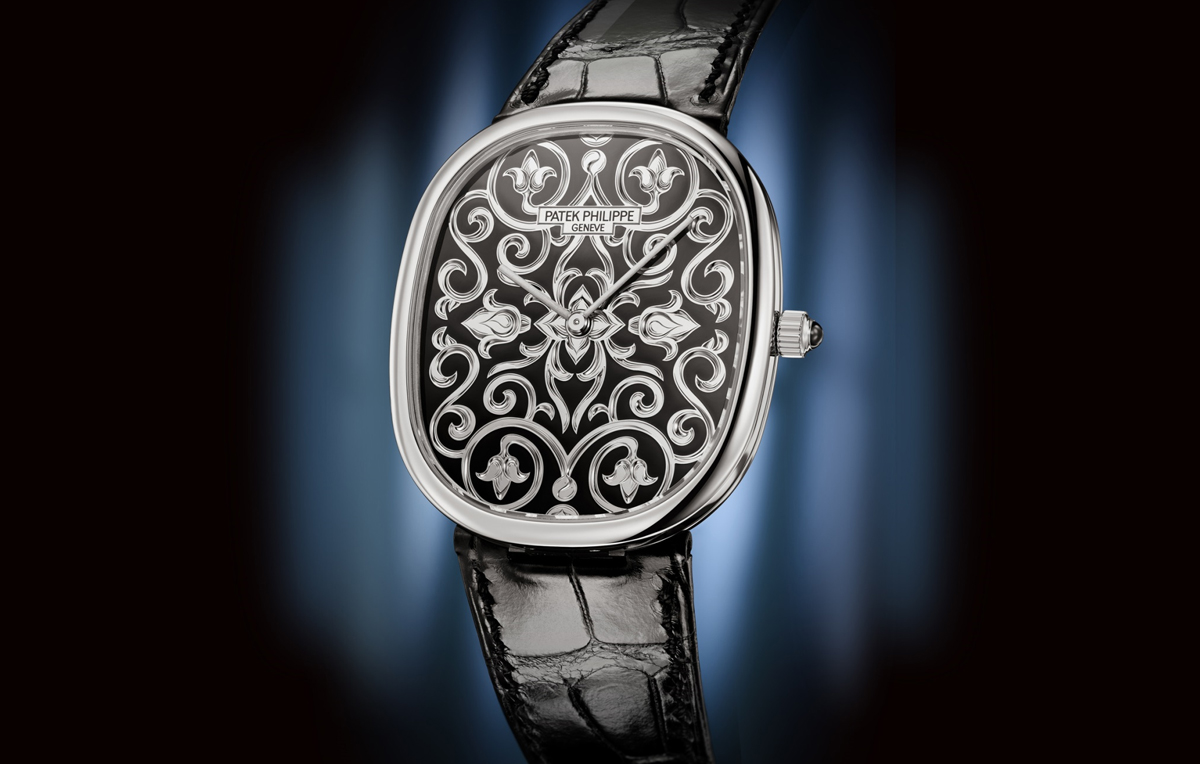
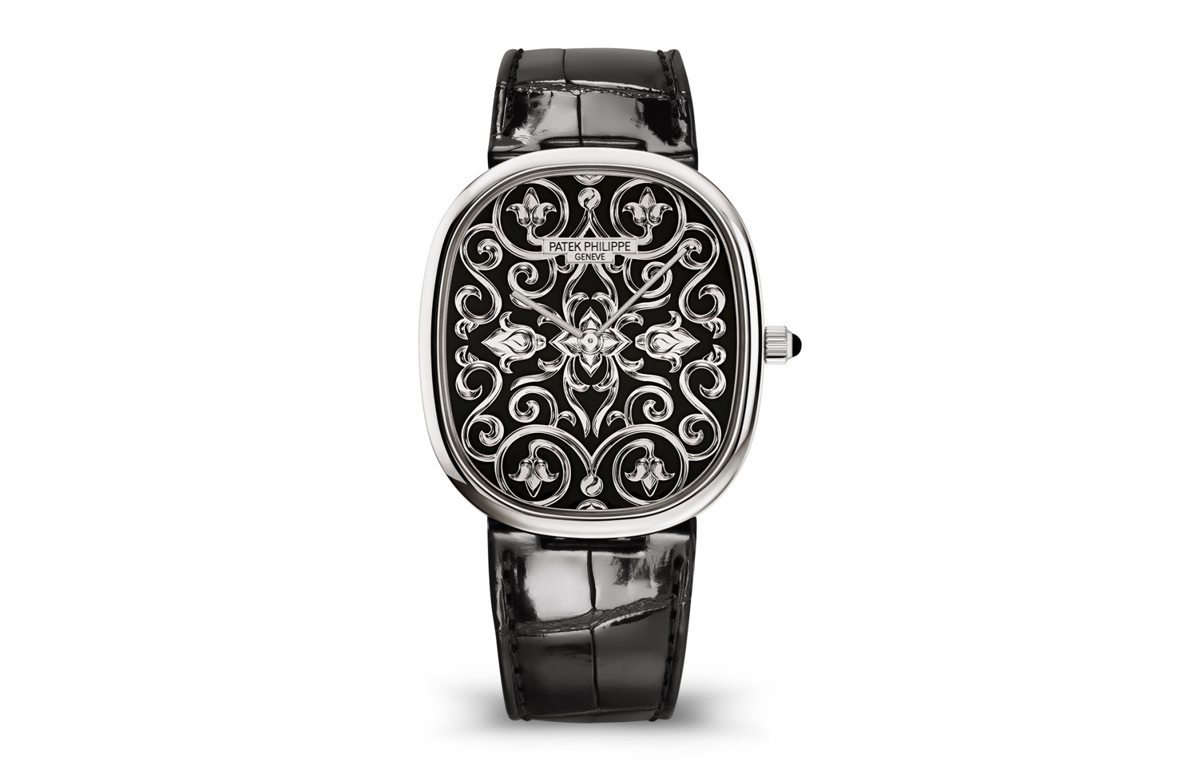
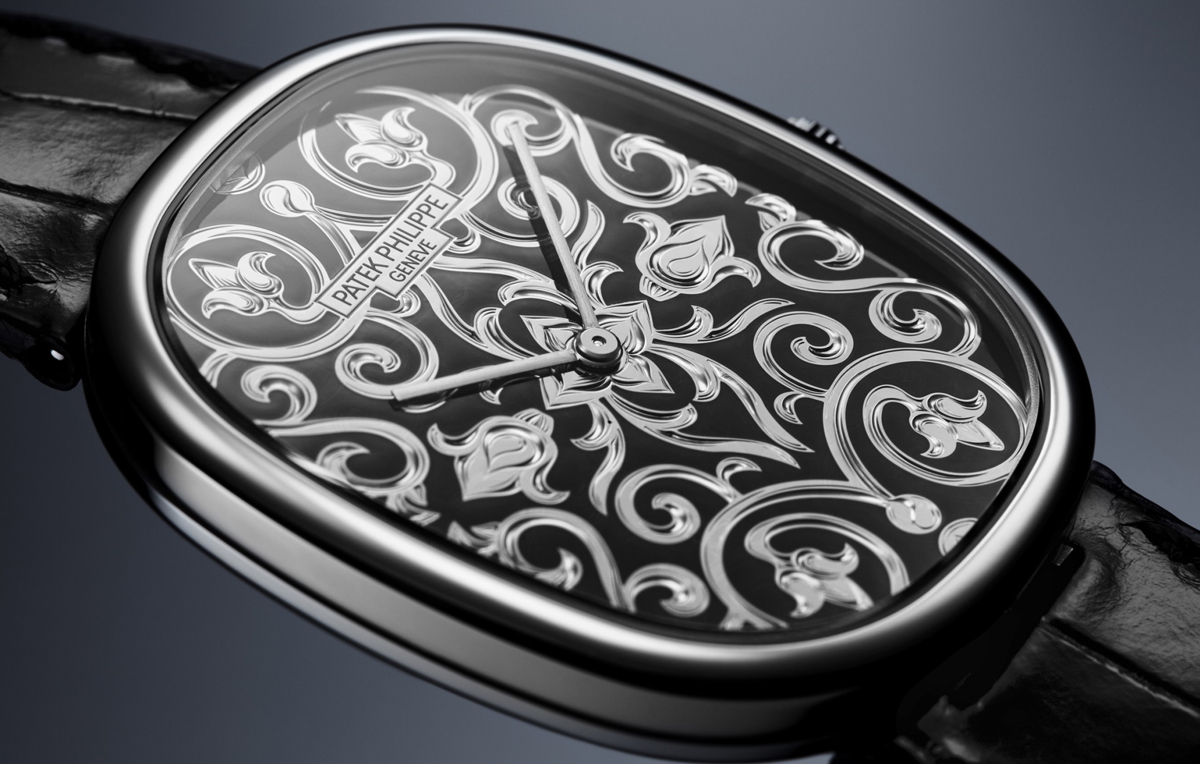
The Patek Philippe (PP) Golden Ellipse was launched in 1968 and is the oldest family of watches in PP’s current catalogue. The Golden Ellipse has an elliptical case.The current Golden Ellipse collection has only three models: rose gold with ebony black sunburst dial; platinum with blue gold sunburst dial; and white gold with hand-engraved and black enameled dial- each powered by PP’s legendary in-house ultra-thin automatic calibre 240. Introduced in 1977 during the quartz crisis, it is a masterpiece in the world of automatic calibres. Evolving over the years, the version inside the Golden Ellipse benefits from PP’s innovations such as the patented “Gyromax” balance and “Spiromax” balance spring and adorned with the Patek Philippe Seal.
While the Golden Ellipse is not the most ‘talked about’ or ‘sought after’ PP, it has an horological pedigree which is second to none. It is the perfect embodiment of discreet elegance and class, and it whispers wealth without screaming about it. Its simplicity speaks volumes about its owner, the gentleman or lady who wants their work to speak for itself. It is the horological equivalent of owning and driving a Rolls Royce. The Golden Ellipse is both a Patek Phillippe icon and an horological icon, that comes about once in a generation, and an heirloom that will last generations. It can hold its own and towers above almost any watch that may come its way. It will be as relevant today and 100 years from now, as it was in 1968.