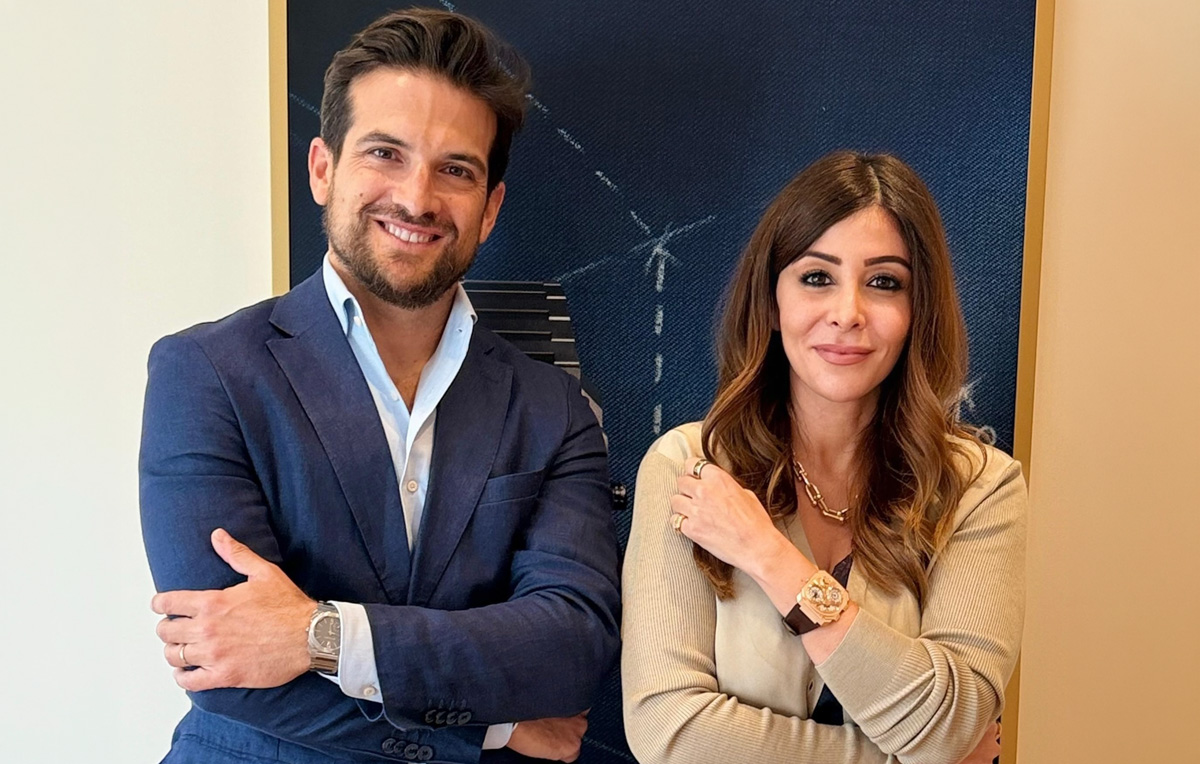
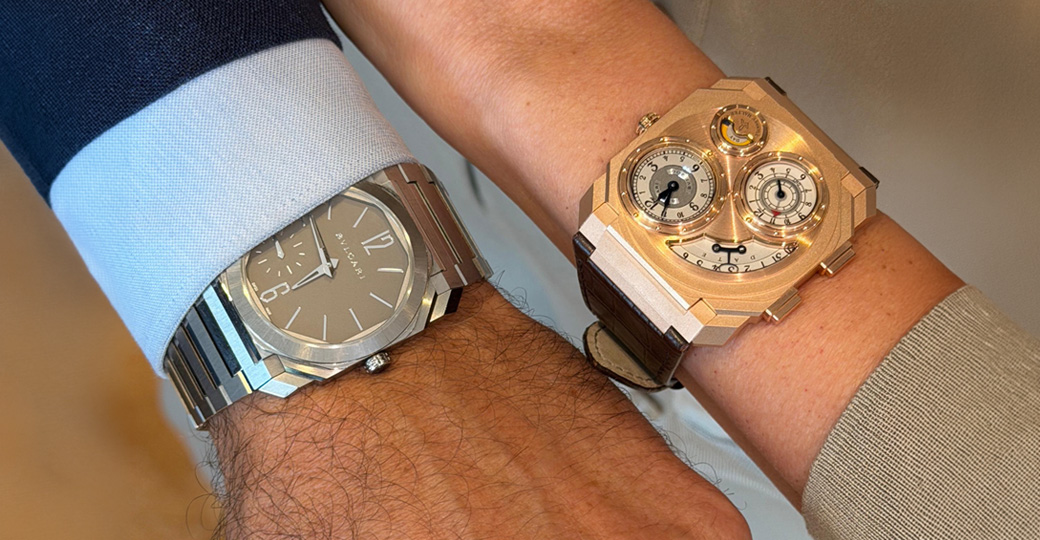
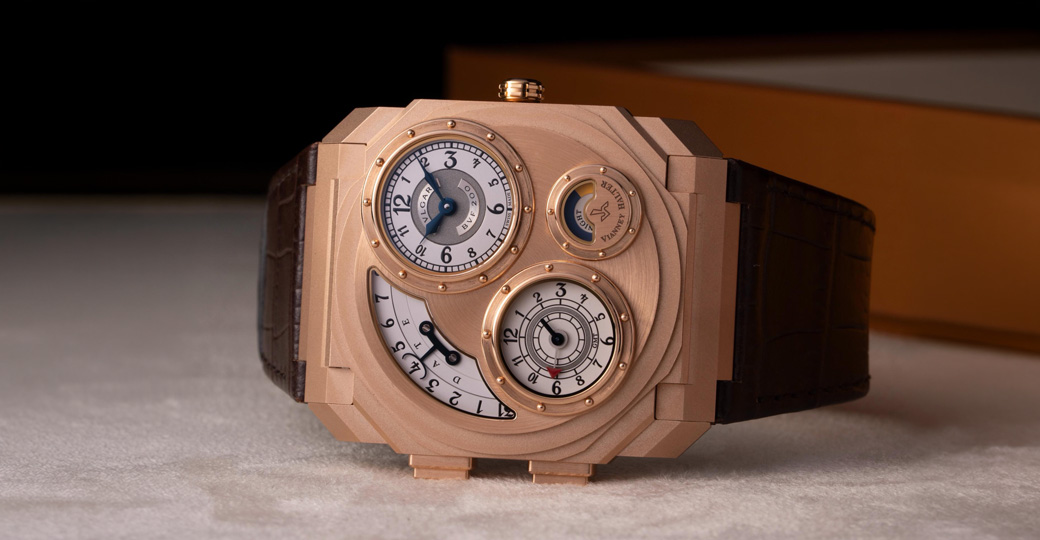
[KJ] Thank you so much for having me at Geneva Watch Days. I wanted to start by talking about the stunning piece on your wrist, the Octo Finissimo Dual Time X Vianney Halter. What is particularly important about this collaboration for Bvlgari?
[JB] For me, what is important about this collaboration is twofold. The first is Bvlgari’s freedom to create and not put boundaries around creativity. When Fabrizio expressed his passion and love for the legendary Antiqua timepiece and Vianney’s world, what I found fascinating about Bvlgari is that we have the freedom to say, “Why not?” and open our creativity to see what we can do with other artists.
Maybe that comes from our Roman DNA. Rome was built by integrating so many cultures, and that openness is part of who we are.
The second aspect is what this collaboration says about the watchmaking legitimacy Bvlgari has built. Having a watchmaker like Vianney fascinated by the world of Finissimo, and willing to bring his work and the world of the Antiqua together with it, demonstrates the journey Bvlgari has made over the past 25 years.
I think the result works because both worlds genuinely come together. Collaborations only work when there is authentic emotion behind them.
[KJ] Why Vianney Halter specifically? You could have collaborated with anyone. What does he bring to the table?
[JB] First of all, there is a mutual respect and a genuine interest in bringing the two worlds together. Fabrizio has always been fascinated not only by Vianney’s watchmaking expertise, but also by his universe: that retro-futuristic, almost spaceship-inspired world.
When they first met a few years ago, they didn’t even talk about watches. They talked about Star Trek, planes and engines. There was a genuine common interest between them as personalities, combined with Fabrizio’s deep respect for the Antiqua and Vianney’s respect for the Finissimo.
So the idea of bridging the two worlds came quite naturally. I met Vianney two years ago here at Geneva Watch Days, after Fabrizio and he had already met several times. The three of us sat together and simply said, “We need to do something.”
[KJ] When you decided to create a timepiece together, were there any red lines? Did Bvlgari tell Vianney there were certain things he could or couldn’t touch?
[JB] No, and that is why I often describe this as a co-creation rather than a collaboration. It wasn’t about putting boundaries in place. It was about bringing together a vision and a design developed by Fabrizio and Vianney and seeing where that could lead us.
The question we kept asking was: are we respecting both icons? Is the object respecting the Antiqua, and is it respecting the Finissimo? That was really the only limit.
The challenges came afterwards, because Vianney designed the object and Bvlgari then had to engineer and manufacture it. For me, one important constraint was the thinness. I didn’t want the watch to exceed 10 millimetres because otherwise it would no longer feel like a Finissimo. With the calibre, case and bezel decoration, we arrived at 9.8 millimetres.
It was a significant technical challenge. We added more than 50 components to the Finissimo base calibre, and assembly takes around five times longer than a regular Finissimo. The case itself is also a work of art, particularly the polishing of both the gold and titanium versions.
The constraints came at the end to ensure the finished piece respected both universes. But at the beginning, creativity needed to be without limits. Otherwise, it wouldn’t work.
[KJ] And with the Dual Time complication, did Bvlgari begin by saying that you wanted a dual-time watch, or did that evolve through Vianney’s design?
[JB] It evolved naturally because that is how the Antiqua was born, with multiple displays and different indications. So the idea of bringing those complications into the Finissimo came from that universe.
What made it particularly interesting is that we had never incorporated those complications into the Finissimo before. We didn’t have a date, GMT or day-and-night indication within the collection.
So it became another challenge: integrating complications into a line that, across its 12 or 13 years of history, had never featured them before.
[KJ] The end result is remarkable. How has the reaction been from collectors?
[JB] We are very happy. For me, the first criterion was that Vianney and Fabrizio needed to be proud of the work. It had to feel authentic.
The reaction from collectors has been outstanding, which is always difficult to predict. We determine production numbers based on what we believe collectors will genuinely be interested in rather than simply around sales.
In this case, even before the official announcement, after presenting the pieces privately for just 24 to 48 hours, everything had already been reserved.
It is always a risk. What matters is when you realise you were right to take that risk. More broadly, I think this industry needs innovation, creativity and sometimes a little more risk-taking from major brands. That is something I want Bvlgari to continue bringing to watchmaking.

[KJ] Speaking of shaking things up, you’ve also decided to dazzle us with the Octo Finissimo Dazzle. What was the thinking behind it?
[JB] The Dazzle is another pure exercise in freedom and creativity, but this time linked to titanium. Titanium is really the common thread running through our Geneva Watch Days presentation.
Finissimo was born in titanium, so we wanted to explore how we could express the material differently across our collections and showcase the capabilities we have with it.
With the Vianney collaboration, you see the technical side and the polishing of titanium. With Dazzle, it is about creativity through laser engraving.
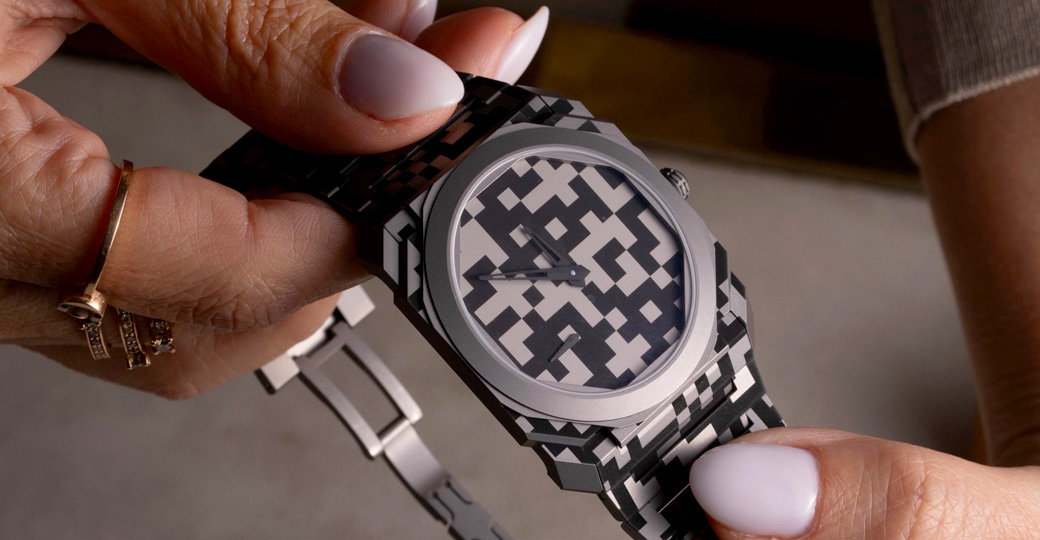
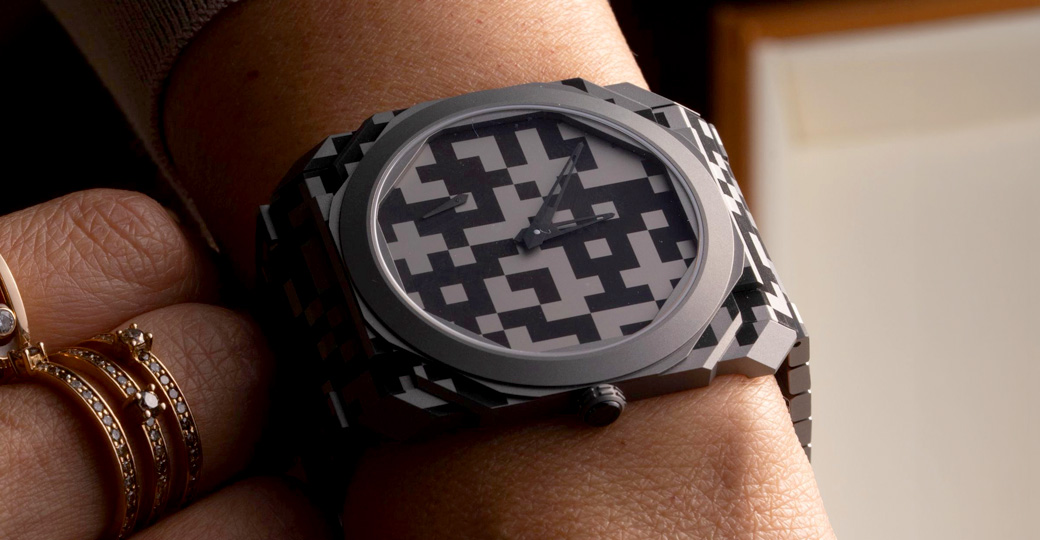
The idea came from the automotive industry. When manufacturers test new prototypes on the road, they use camouflage patterns to blur the angles and disguise the shape of the car.
The 40mm Finissimo has now become very recognisable, so we thought it would be interesting to create a watch that actually makes this increasingly iconic shape less recognisable. It isn’t really a watch designed primarily around readability. The point is the playful idea of concealing the architecture of the Finissimo.
It is limited to 80 pieces and is very much intended for Finissimo collectors. It also demonstrates what we can do with titanium and laser engraving, which is a capability not many brands possess.
[KJ] You’ve also continued the story of the 37mm Finissimo. How does this new expression fit into the wider titanium story?
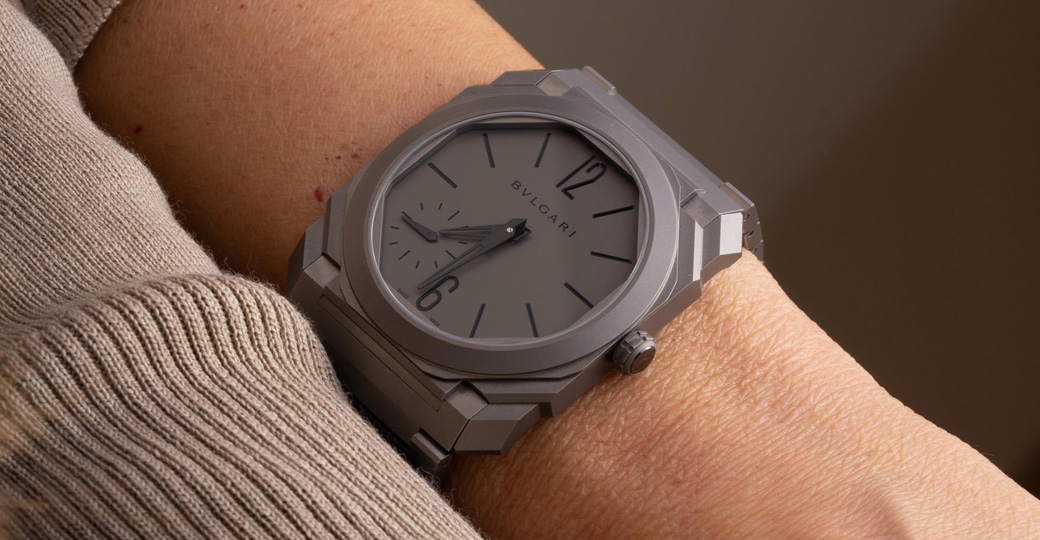
[JB] The 37mm Finissimo launched at Watches and Wonders in the historical sunblasted titanium finish. Here, we are introducing another treatment of titanium with brushed and satin finishing, making it slightly more elegant and versatile.
It is another way of exploring the material, this time through finishing rather than engraving. It has actually become one of my favourite watches at Bvlgari because it is highly technical while remaining very elegant and universal.
The calibre is 20% smaller than the 40mm version, yet it carries almost five days of power reserve, which is remarkable given the dimensions of the watch.
We then extended this exploration of titanium to Bvlgari Aluminium. When Bvlgari Aluminium launched at the end of the 1990s, it was disruptive because it brought rubber and aluminium together in an unexpected way. Titanium is now such an important part of who we are, so we wanted to bring those worlds together through the new GMT and Chronograph.
That really became the red thread of Geneva Watch Days for us: exploring titanium through technicality, creative freedom, finishing and also greater accessibility.
[KJ] Does the 37mm Finissimo also create an opportunity to introduce more women to the collection?
[JB] Completely. Already around one client out of three buying the 37mm version is a woman, so approximately 30%.
That is already happening with the sunblasted version, and we believe the new satin-polished execution could have even greater appeal to women. There is definitely an opportunity there and I think women will continue buying into the Finissimo.
[KJ] Looking at the collaborations you have done with independent artists and watchmakers across Finissimo, is this something Bvlgari is committed to continuing?
[JB] I think this goes beyond Bvlgari and speaks to the watchmaking industry as a whole.
Geneva Watch Days was originally created during COVID because this is an industry built around passionate people and encounters, and there was a need to meet again. But another important ambition was to bring independent brands together with more established houses within a much freer and more flexible format.
For us as an established brand, bridging the world of independent watchmakers is important because it can be a genuine win-win. Larger brands have greater awareness and can help cast a light on independent creators. At the same time, independent watchmakers bring extraordinary creativity and innovation.
We saw that with Max Büsser and now with Vianney. These collaborations demonstrate Bvlgari’s own spirit of creativity and innovation while also giving greater visibility to independent watchmaking.
I truly believe the rise of independent watchmaking is partly connected to some established brands forgetting to innovate and nurture the curiosity of collectors. Nature hates emptiness. If established brands stop bringing something new, something else will fill that space.
At Bvlgari, cross-fertilisation is part of our DNA. Rome has always welcomed different cultures and brought them together, and I love translating that philosophy into watchmaking through partnerships with independents.
So yes, there should be more to come. I can’t say there definitely will be, but we love bridging these worlds.
[KJ] Have you already decided who the next collaboration will be with?
[JB] No, not yet. Stay tuned.